Patient help
Which artificial limb is right for you?
The right limb is the one that fits your stump, your day and your budget, not the most expensive one on the shelf. This guide explains how prosthetists match parts to people, so you can ask the right questions.
- Try before you choose
- Honest advice
- Answered 24/7
Clinically reviewed by Ummad Shafique Mughal, Consultant Orthotist and ProsthetistUpdated 6 October 2026
In short
Four questions decide most of it
Where is the amputation? How active are you, honestly? What does your work and home ask of the limb? And what can you spend now, and over the next five years?
The level decides the socket and joints. Activity decides the knee, foot or hand. Work and home decide the tough or delicate parts. Budget decides where you start, and you can usually upgrade later on the same socket.
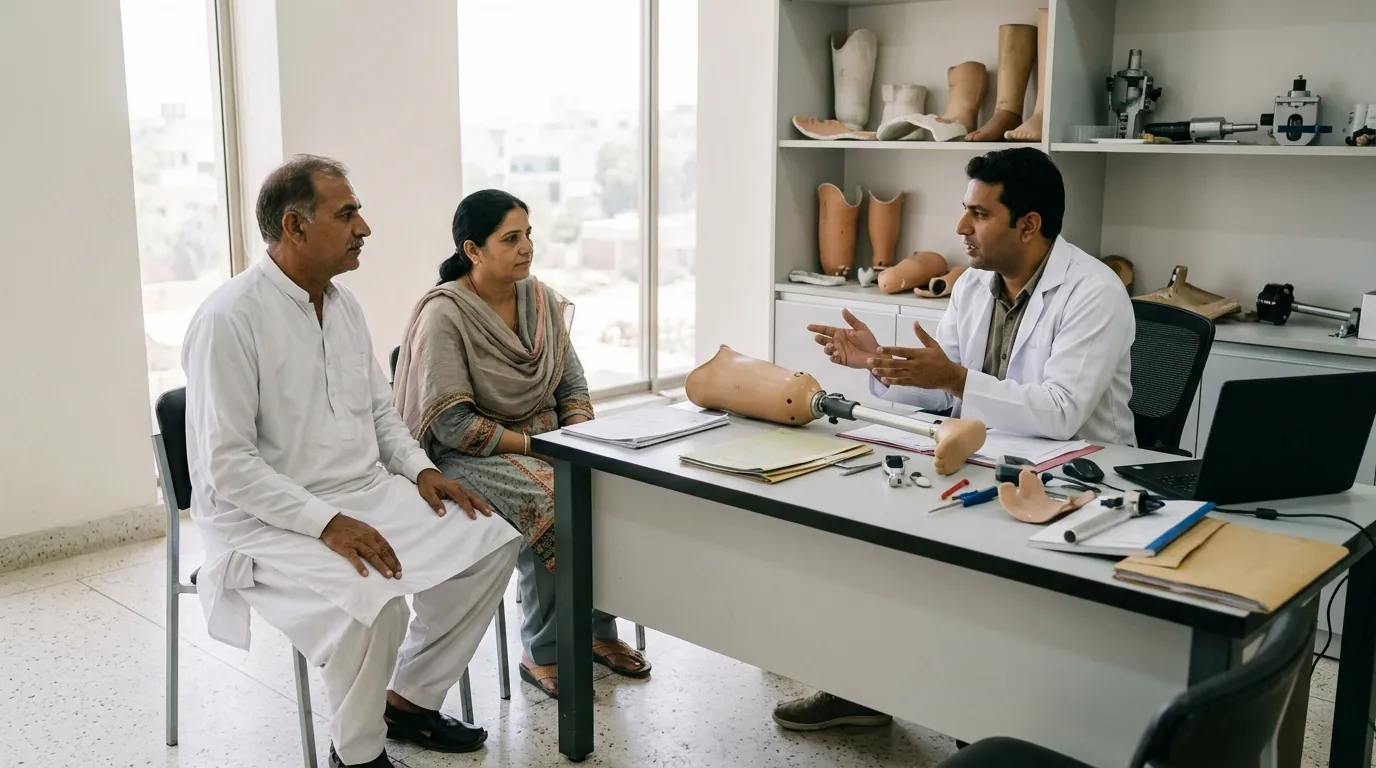
Activity levels
Activity levels for legs, in plain words
Prosthetists often describe walking ability on a scale from 0 to 4. It helps match the knee and foot to you.
| Level | Who it describes | Typical parts |
|---|---|---|
| Level 0 | Not able to walk safely, even with help; a limb may help with transfers or appearance. | Light cosmetic limb |
| Level 1 | Walks indoors on level floors, slowly. | Locking or stable knee, SACH foot |
| Level 2 | Walks at home and in the neighbourhood, managing kerbs and a few steps. | Polycentric knee, multiaxial foot |
| Level 3 | Walks at different speeds, outdoors, at work, on uneven ground. | Hydraulic knee, carbon foot |
| Level 4 | Very active, sport or heavy physical work. | Premium hydraulic or microprocessor knee, energy-return foot |
Your level can rise as you get stronger. We often fit for your level today and plan the upgrade.
For arms
Choosing an arm or hand
| Option | Best for | Things to know |
|---|---|---|
| Cosmetic arm or hand | Appearance, balance, light holding | Light and simple; no grip of its own |
| Body-powered arm | Work, strength, reliability | Needs a harness; tough and cheap to repair |
| Myoelectric arm | Natural movement without a harness | Needs clear muscle signals, daily charging and care |
| Silicone fingers | Natural look after finger loss | Cosmetic; mechanical fingers if grip is needed |
Budget
Two sensible ways to plan the spend
Start simple, upgrade later
- A good socket firstThe part that decides comfort, built properly from day one.
- Simple, tough partsLearn to walk or grip on dependable parts.
- Upgrade on the same socketSwap the knee, foot or hand when you know what you need.
- Good for first limbsAnd for anyone still changing shape.
Invest in key parts now
- You already know your needsA second limb, or a clear active life.
- You walk or work hard every dayBetter parts save energy and joints.
- Fewer changes laterBuying once can cost less than upgrading twice.
- Good for settled stumpsOnce the shape has stopped changing.
Questions to ask
Questions to ask any prosthetist, including us
- Will I get a test socket?You should, before the final socket is made.
- What exactly is in the price?Ask for every part in writing.
- Why this knee, foot or hand for me?The answer should be about your walking or your work, not a brand.
- What will it cost to keep it fitted?Sockets, liners and servicing over five years.
- Who will see me at follow-ups?Ideally the same person who fitted the limb.

By level
Read the page for your level
Questions
Choosing questions
Call +92 337 8414002 to talk it through.
Is the most expensive limb the best?
Not for everyone. The best limb matches your stump and your day. An advanced part on a poor socket is worse than a simple part on a good one.
Can I try a knee or foot before buying?
Often, yes. During the test socket stage we can try settings and parts before you agree the final build.
What if my activity level changes?
Parts can usually be upgraded on the same socket as you get stronger.
Should an older parent have a simpler limb?
Often a stable, light limb is safest. Age alone does not decide it; strength, balance and health do.
How do I choose between a hook and a hand?
Think about what you will do most. Hooks are best for work and grip, hands for appearance and light tasks. Many people have both.
Do brands matter?
Less than people think. We fit parts from many makers and choose the one that suits you, not the brand.
Talk to the clinic
Talk it through with us
Call or WhatsApp with the level, your age and what you want to do again. We will help you choose honestly, before anything is made.