Lower limb prosthetics, DHA Karachi
Above knee prosthesis: the right knee makes all the difference
Without your own knee, the prosthetic knee decides how safe and how natural each step feels. We match the knee to how you really walk, build a socket that grips the thigh without pinching, and train you until the leg feels like yours.
- Free assessment
- Test socket first
- Answered 24/7
Clinically reviewed by Ummad Shafique Mughal, Consultant Orthotist and ProsthetistUpdated 6 October 2026
Above knee legs
How an above knee leg works
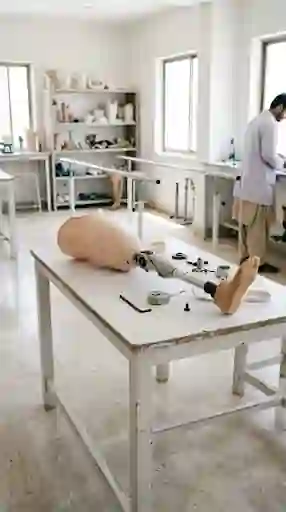
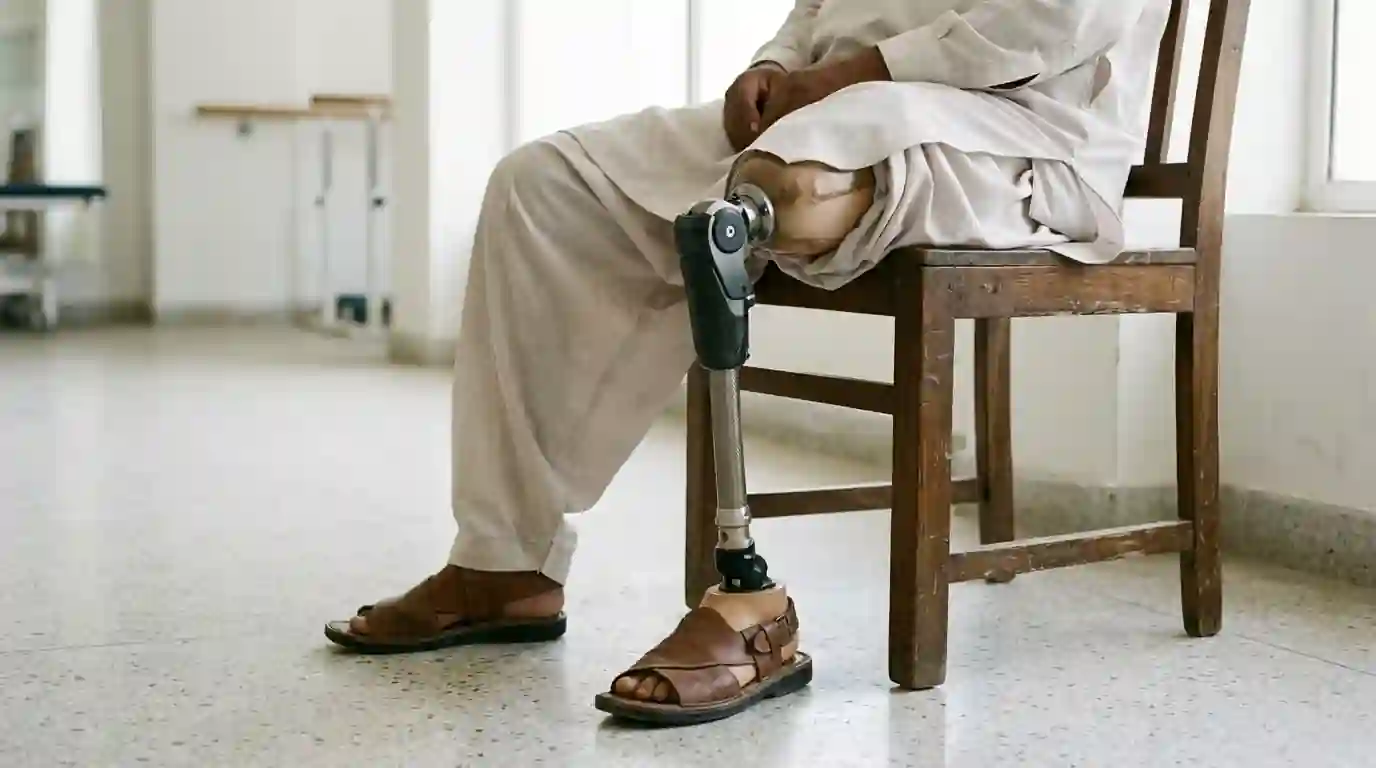
An above knee prosthesis replaces the knee, lower leg and foot when the amputation is through the thigh. The socket holds the thigh and takes weight on the sitting bone, and a prosthetic knee bends when you sit and resists or locks when you stand.
Walking takes more energy than on a below knee leg, so training matters more. Prices start from Rs 150,000 for a sturdy mechanical knee and rise steeply with hydraulic and microprocessor knees. Most legs take four to six visits.
Getting ready
Choosing safely: who does well first time
An above knee leg asks more of the body. These signs tell us a first leg will go well, and these tell us to plan more carefully.
Signs a first leg will go well
- Strength in the hipBeing able to lift the stump sideways and backwards against a little resistance.
- Standing balanceStanding on the good leg for a few seconds without holding on.
- A shaped, settled stumpShrinker socks worn for some weeks so the thigh is firm and even.
- Someone to help at firstA family member at the first visits makes home practice safer.
Where we plan more carefully
- Heart or breathing problemsWalking on an above knee leg uses much more energy; we ask for your doctor's view first.
- A hip that will not straightenA tight hip pulls the stump forward and needs stretching before fitting.
- A very short stumpWe may need a different socket shape or a hip-style design; we tell you honestly after the assessment.
Inside the leg
What goes into an above knee leg
The socket and the knee carry most of the cost and most of the comfort.
Shaped to hold the thigh firmly and take weight on the sitting bone. Tested in clear plastic before the final one is made.
Made by us in every buildA silicone liner with a pin or a suction valve keeps the leg on without a belt for most people.
Belts for weaker or shorter stumpsLocking, polycentric, hydraulic or microprocessor. This is where the price changes most.
Mechanical knees from about Rs 35,000A stable SACH foot for first legs and older users, or a carbon foot for active walkers.
Chosen to match the kneeThe tube, adapters and an optional turntable that lets you cross your legs or sit lower more easily.
A rotator adds comfort on the floorA foam cover shaped like your other thigh and calf so clothes hang naturally.
Optional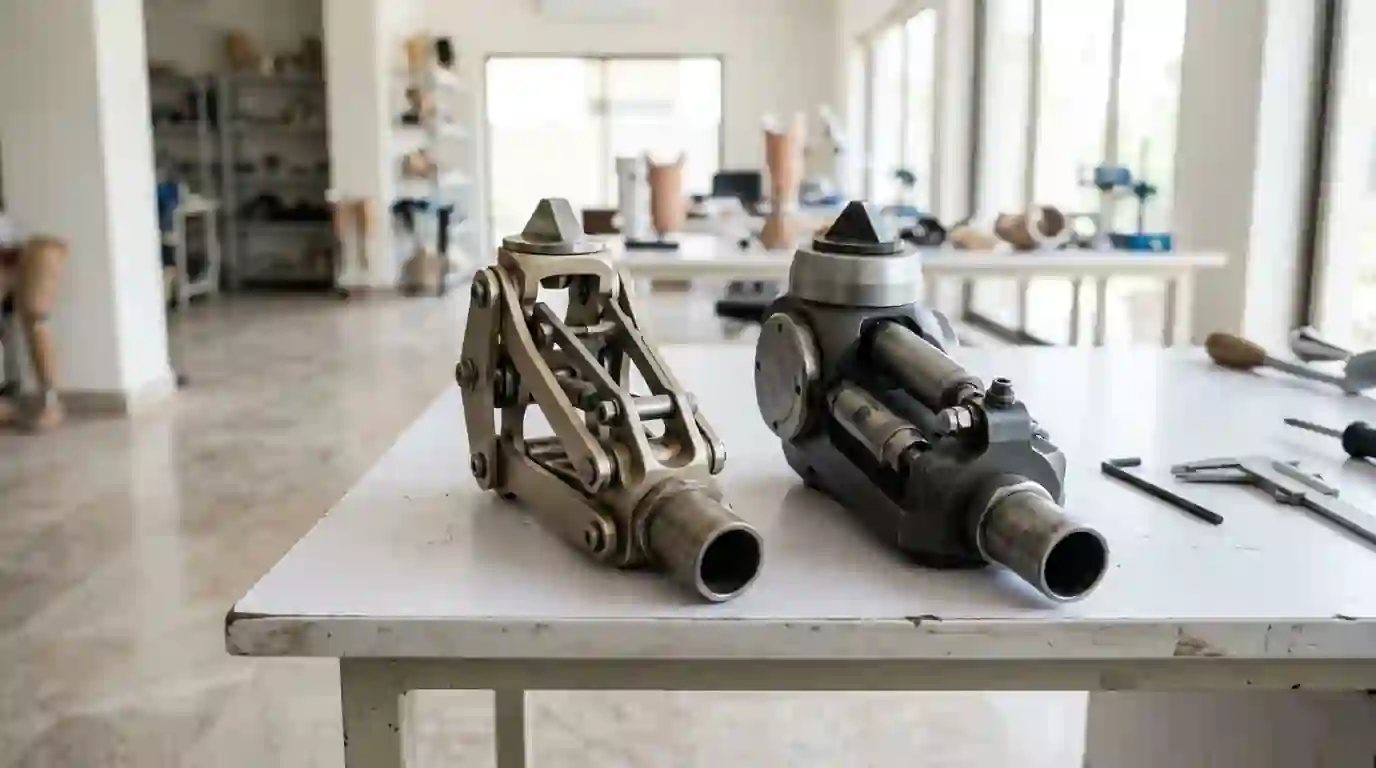
Prices for 2026
Three ways to build an above knee leg
Indicative ranges. A firm figure comes in writing after the free assessment and does not change without your agreement.
| Build | What you get | Indicative price |
|---|---|---|
| Local build | Our socket with a mechanical locking or single-axis knee and a SACH foot. Safe and simple for first legs and older users. | Rs 150,000 to 300,000 |
| Mixed build | A polycentric or hydraulic knee, a silicone liner and an imported foot. Smoother walking at different speeds. | Rs 300,000 to 700,000 |
| Imported build | A premium hydraulic or microprocessor knee, a suction or vacuum socket and a carbon fibre foot. | Rs 700,000 to 2,500,000+ |
Microprocessor knees sit at the very top of this range and suit people who walk a lot and can charge and care for them. See every level in the price guide.
Your visits
How an above knee fitting usually runs
Above knee legs take a little longer because walking training takes longer.
- First callLevel, date of surgery and how you move now.
Day 1
- Assessment and castStrength, balance and the shape of the thigh, then the cast.
Week 1
- Test socketA clear socket on a temporary knee so you can stand and shift weight.
Week 2
- Second check if neededThigh stumps change shape quickly; a second check socket is common.
Weeks 2 to 3
- Final leg and alignmentKnee and foot set for safe standing and an even stride.
Weeks 3 to 4
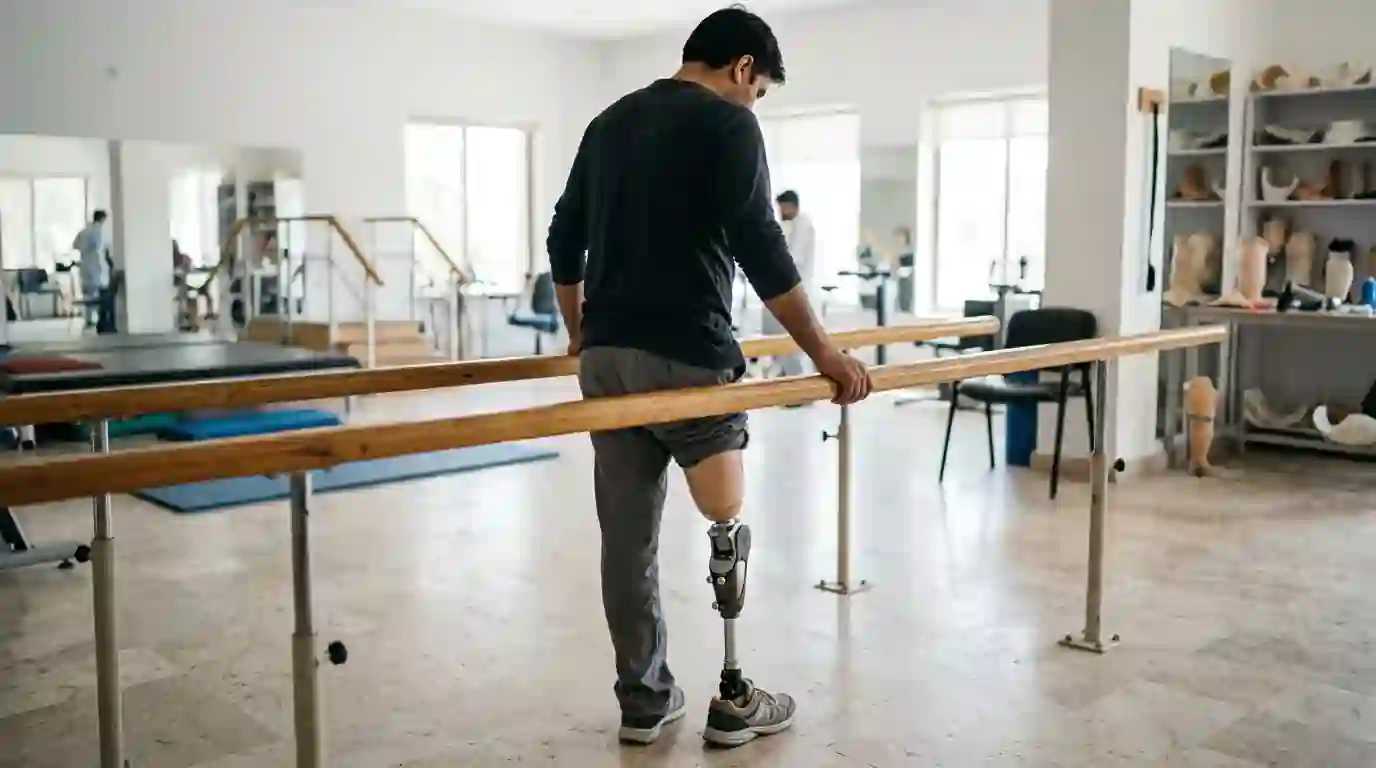
- Walking trainingBars, then a frame or sticks, then walking on your own where possible.
Weeks 4 to 8
Many above knee users keep training for several weeks after the leg is finished. That is normal, and it is where most progress happens.
In the clinic
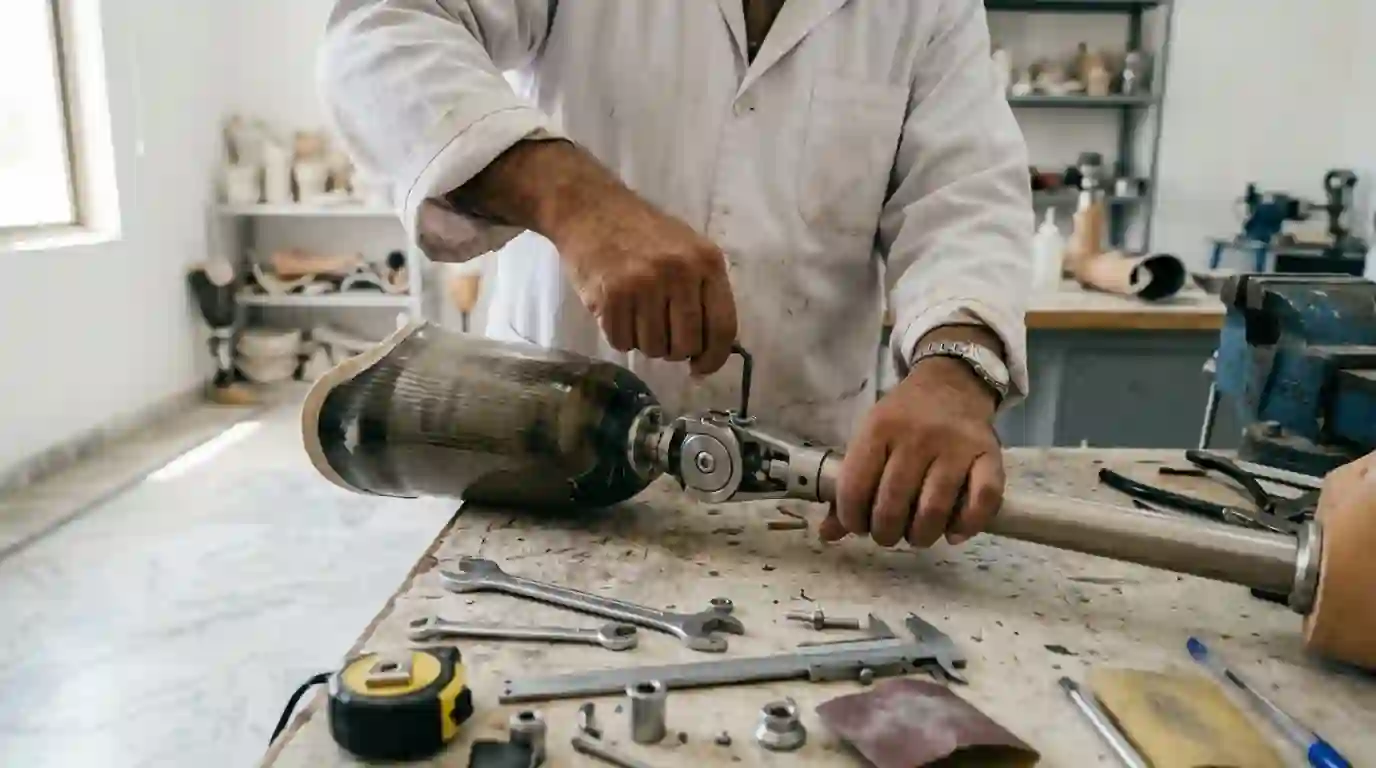
Building and fitting an above knee leg
Daily life
Day to day with an above knee leg
The first months are about learning to trust the knee. These habits help.
Each knee behaves differently on slopes and stairs. Practise with us before you try them alone.
Keep the inner thigh clean and dry; heat rash at the socket edge is common in summer.
Back up to the chair until you feel it, then sit. Locking knees must be unlocked first.
Walking uses more energy than before. Rest is part of training, not giving up.
See your doctor first if
- The wound or scar is open, weeping or smells
- There is redness, heat or a hard lump spreading on the thigh
- You get chest pain or become very breathless walking a short distance
- You have a fever or feel unwell
- Your blood sugar has been high or hard to control
We will plan the fitting around your doctor's advice, and we can start with a lighter, simpler knee.
Questions
Above knee questions families ask
Ask anything else on WhatsApp or call +92 337 8414002, day or night.
How much does an above knee prosthesis cost in Pakistan?
A safe local build with a mechanical knee starts from Rs 150,000. Legs with hydraulic knees usually cost Rs 300,000 to 700,000, and microprocessor knees take the price past Rs 2,500,000. The assessment is free and the firm price is given in writing.
Which knee should I choose?
It depends on how much and how fast you walk. Older or less active users are often safest on a locking or stable polycentric knee. People who walk at different speeds do better with a hydraulic knee. We let you try before you decide.
Is a microprocessor knee worth it?
For a very active walker who can charge it every night and afford its servicing, it can make stairs and slopes far safer. For many first-time users a good mechanical or hydraulic knee is the better use of the money.
Will I need a walking stick?
Many above knee users carry a stick for long distances or rough ground, especially in the first year. Some walk without one at home and at work once their hip strength improves.
How long does the training take?
Usually several weeks of practice after the leg is fitted, with most progress in the first two to three months. We give you exercises to do at home between visits.
Can I sit cross-legged or on the floor?
Sitting on the floor is hard with an above knee leg. A turntable rotator lets you turn the lower leg sideways, which helps. Many users sit on a chair or take the leg off at home.
Related
Other limbs and help you may need
Talk to the clinic
Talk to us about the right knee
Call or WhatsApp with the date of surgery and how you move now. We will explain the knee options that suit you and the likely price.