Lower limb prosthetics, DHA Karachi
Below knee prosthesis: walk well again on a socket made for you
A below knee leg is the one most people walk best on, as long as the socket fits. We cast your stump, fit a clear test socket first, then build the leg with the foot your day needs, from a sturdy local build to imported carbon fibre.
- Free assessment
- Test socket first
- Answered 24/7
Clinically reviewed by Ummad Shafique Mughal, Consultant Orthotist and ProsthetistUpdated 6 October 2026
Below knee legs
What a below knee leg is, in plain words
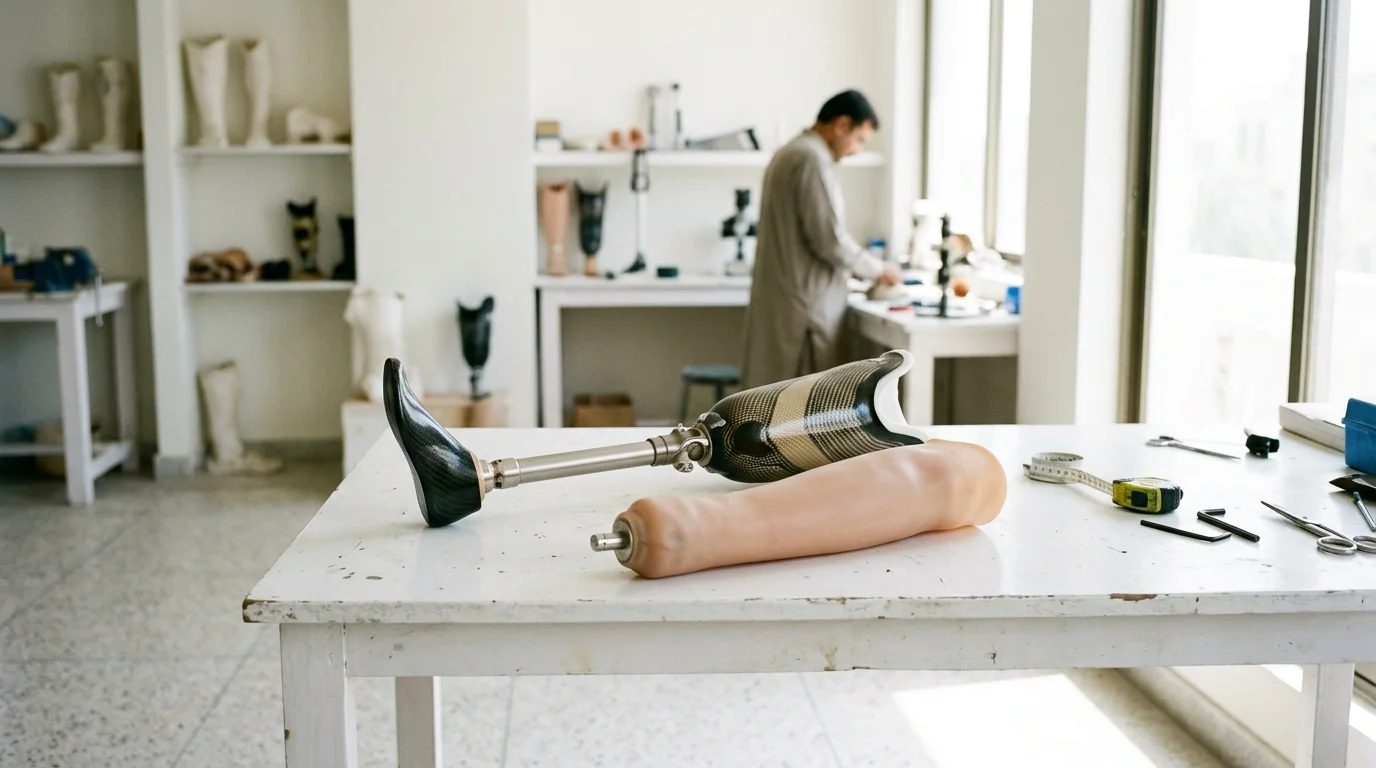
A below knee prosthesis replaces the lower leg and foot when the amputation is below the knee joint. You keep your own knee, which is why most below knee users walk with little or no limp once the socket is right.
The leg has four main parts: a socket made from a cast of your stump, a liner or sock that cushions it, a pylon, and a foot. Prices start from Rs 80,000 for a dependable local build and rise with imported feet and suspension. Most legs take three to five visits.
Is it right for you
Who walks well on a below knee leg
Almost everyone with a healed below knee stump can be fitted. These things make the first months easier, and these are the situations where we slow down.
Usually a good fit
- A healed, settled stumpThe wound is closed and the swelling has mostly gone, often six to eight weeks after surgery.
- A knee that straightensIf the knee bends and straightens fully, the socket sits well and walking comes quickly.
- Some strength to practiseStanding between parallel bars or with a frame before the first fitting helps a great deal.
- A reason to walkWork, the mosque, school runs or the market. A clear goal makes training stick.
Where we take more care
- A stump that is still healingWe fit nothing on an open wound. We show you shrinker socks and exercises while it closes.
- A knee stuck in a bendA tight knee needs stretching and physiotherapy first, or the socket presses in the wrong places.
- Very poor blood flowAfter a diabetic or vascular amputation we use softer sockets and slower first weeks, with your doctor's go-ahead.
Inside the leg
The parts of a below knee leg and what each one does
The socket matters more than any brand. A simple foot on a well-made socket beats an imported foot on a poor one.
Cast from your stump and checked as a clear test socket first. It carries weight on the tendon below the kneecap and the sides of the shin, not on the bony end.
Made by us in every buildA silicone or gel liner cushions the skin and holds the leg on; a simpler build uses a padded insert and cotton socks.
Silicone liners from about Rs 25,000Pin lock, sleeve or vacuum: how the leg stays on when you step, sit and climb stairs.
Vacuum adds the most to the priceThe tube and fittings that join socket to foot and let us fine-tune the alignment.
Aluminium, titanium or steelFrom a solid SACH foot to a flexible carbon fibre foot that gives energy back as you walk.
SACH feet from about Rs 10,000A foam cover shaped like your other leg, so trousers and shalwar hang naturally.
Optional on most legs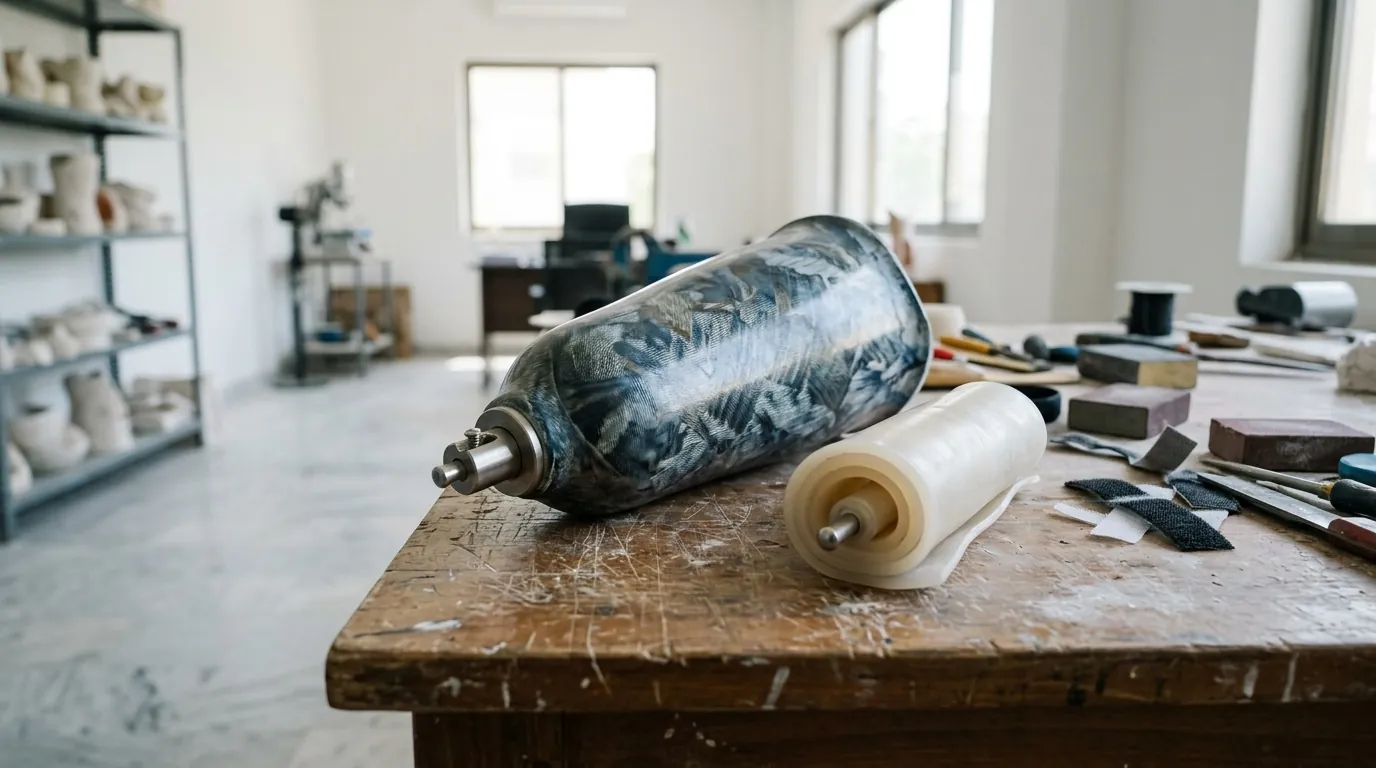
Prices for 2026
Three ways to build a below knee leg
Indicative ranges. The low end of each row is a real leg we would fit; your firm price comes in writing after the assessment.
| Build | What you get | Indicative price |
|---|---|---|
| Local build | Our socket, a padded insert or basic liner, a pylon and a SACH or local dynamic foot. Strong, simple and easy to repair. | Rs 80,000 to 150,000 |
| Mixed build | Our socket with a silicone liner and pin lock or sleeve, and an imported foot with more spring. | Rs 150,000 to 350,000 |
| Imported build | Vacuum suspension, a premium carbon fibre foot and lighter parts, for long walking days and active work. | Rs 350,000 to 900,000+ |
Every build includes the free assessment, a test socket and walking training. See every level in the price guide.
Your visits
How a below knee fitting usually runs
For a healed stump with no complications. If you are travelling to Karachi, tell us your dates and we will bunch these together.
- First callLevel, date of surgery, how you walk now.
Day 1
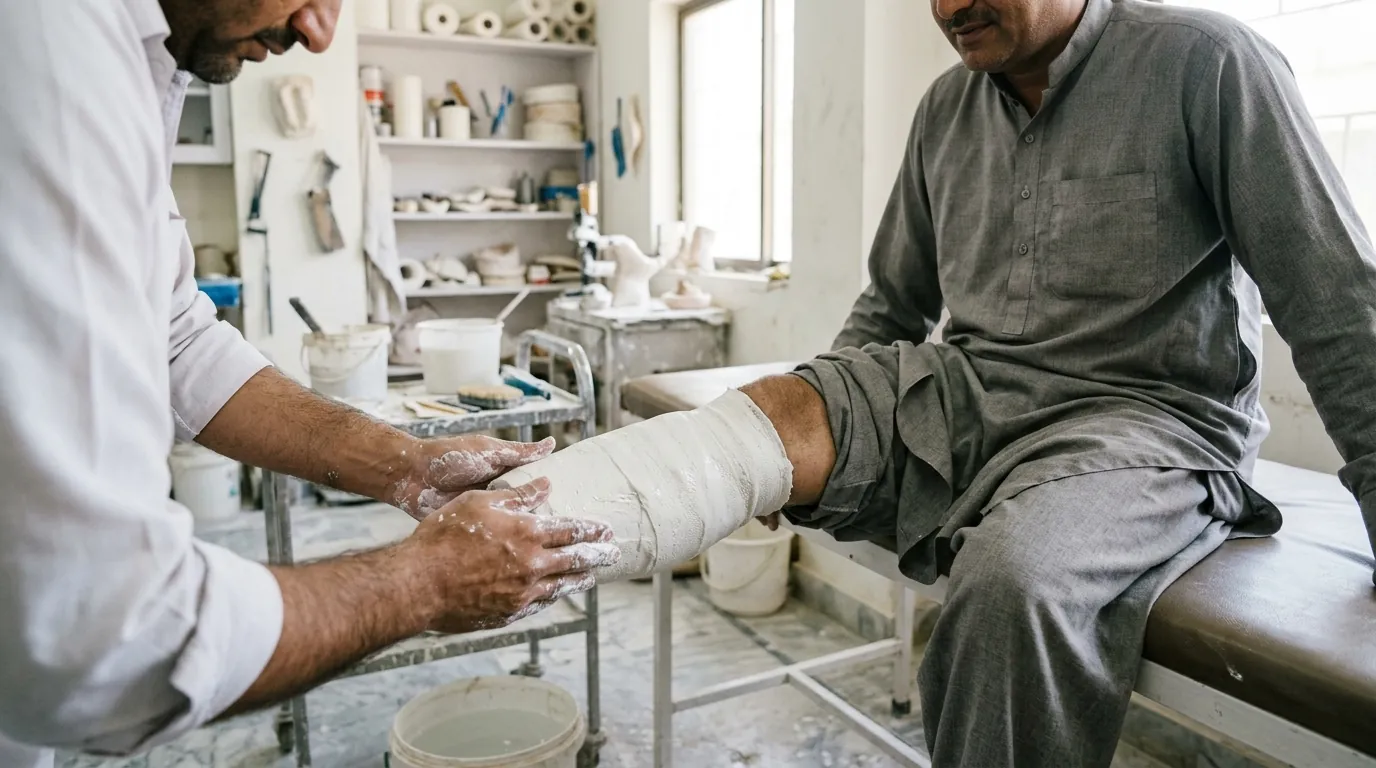
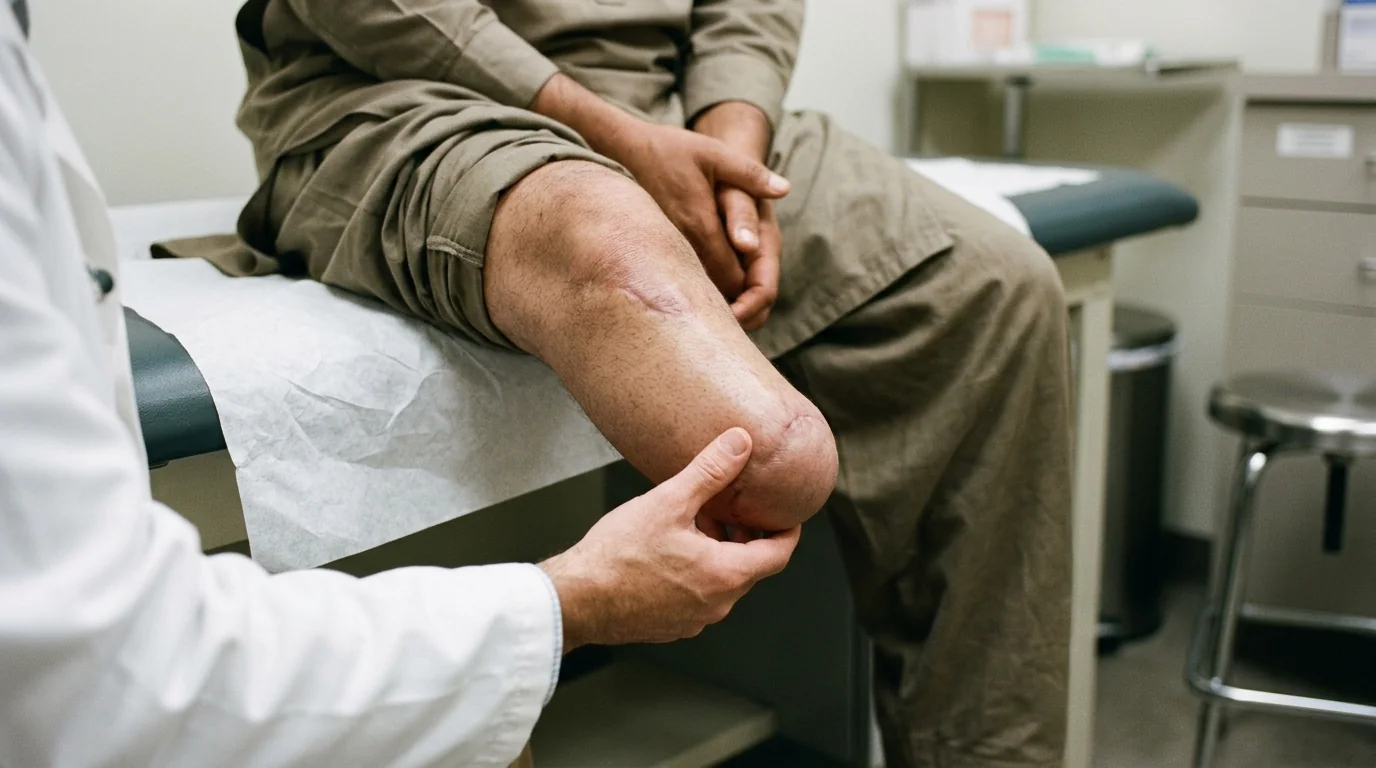
- Assessment and castWe check the skin and knee, then take the cast the same day if the stump is ready.
Week 1
- Test socketYou stand and take steps in a clear socket; we mark and fix pressure points.
Week 2
- Final legThe socket is laminated, the foot fitted and the leg aligned to your stride.
Week 3
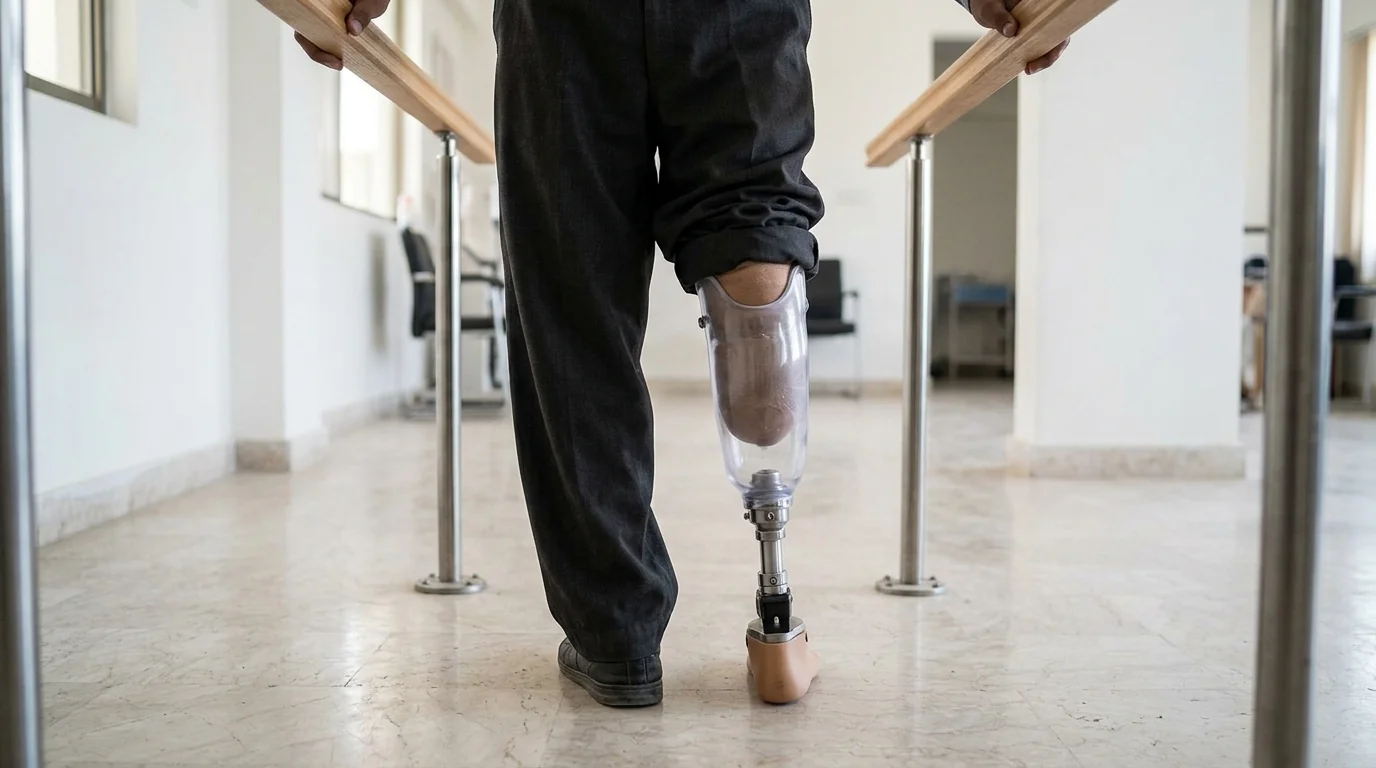
- Walking trainingBalance and weight shift, then steps between the bars and on stairs.
Weeks 3 to 4
- Follow-upsSocks or pads as the stump shrinks, small adjustments, skin checks.
Weeks 4 to 8
The stump keeps shrinking for the first six to twelve months, so many first-time users need a new socket within a year.
In the clinic
From cast to first steps
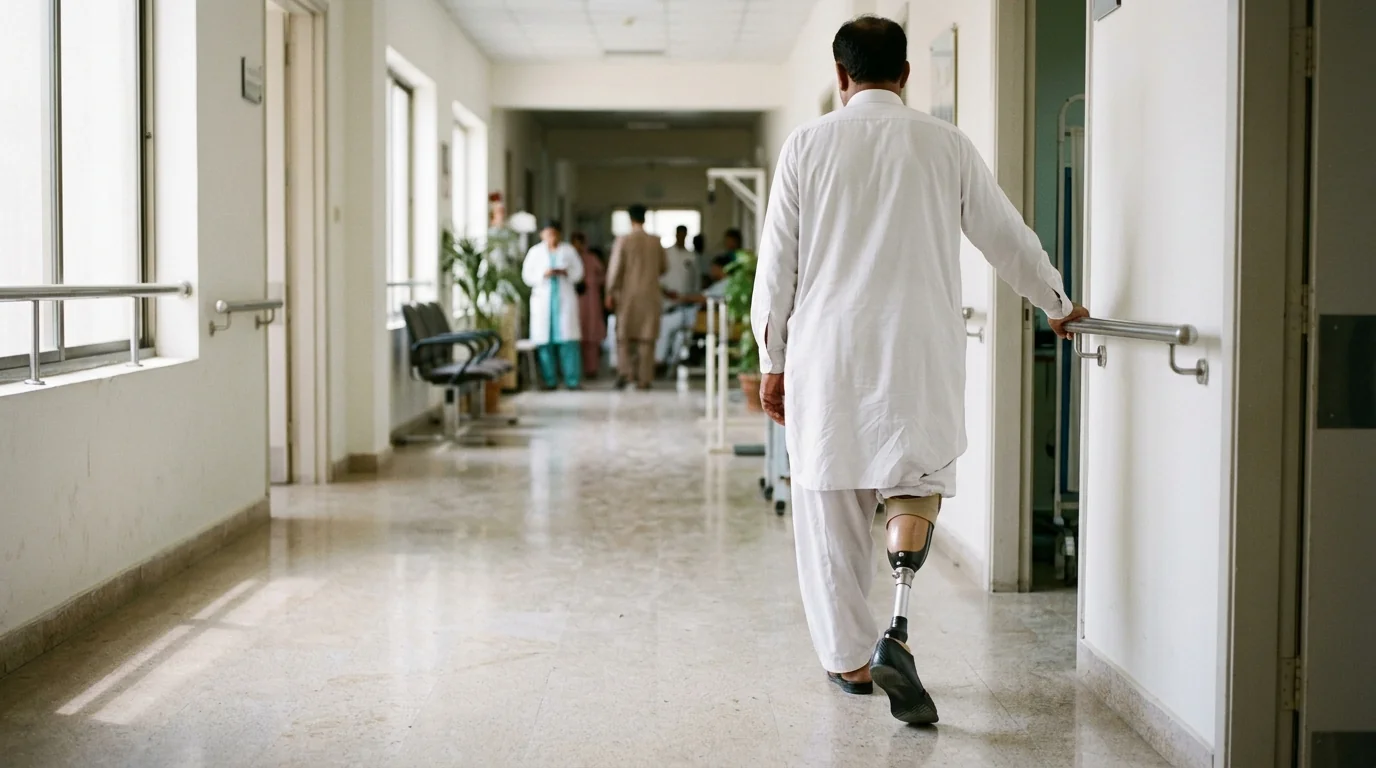
Daily life
Living with a below knee leg in Karachi
Small habits decide how comfortable the leg feels in our heat.
Wash the liner every night and keep a second one if you can. Summer sweat is the commonest cause of rubs and rashes.
Start with an hour or two, check the skin, then add time. Most people wear the leg all day within a few weeks.
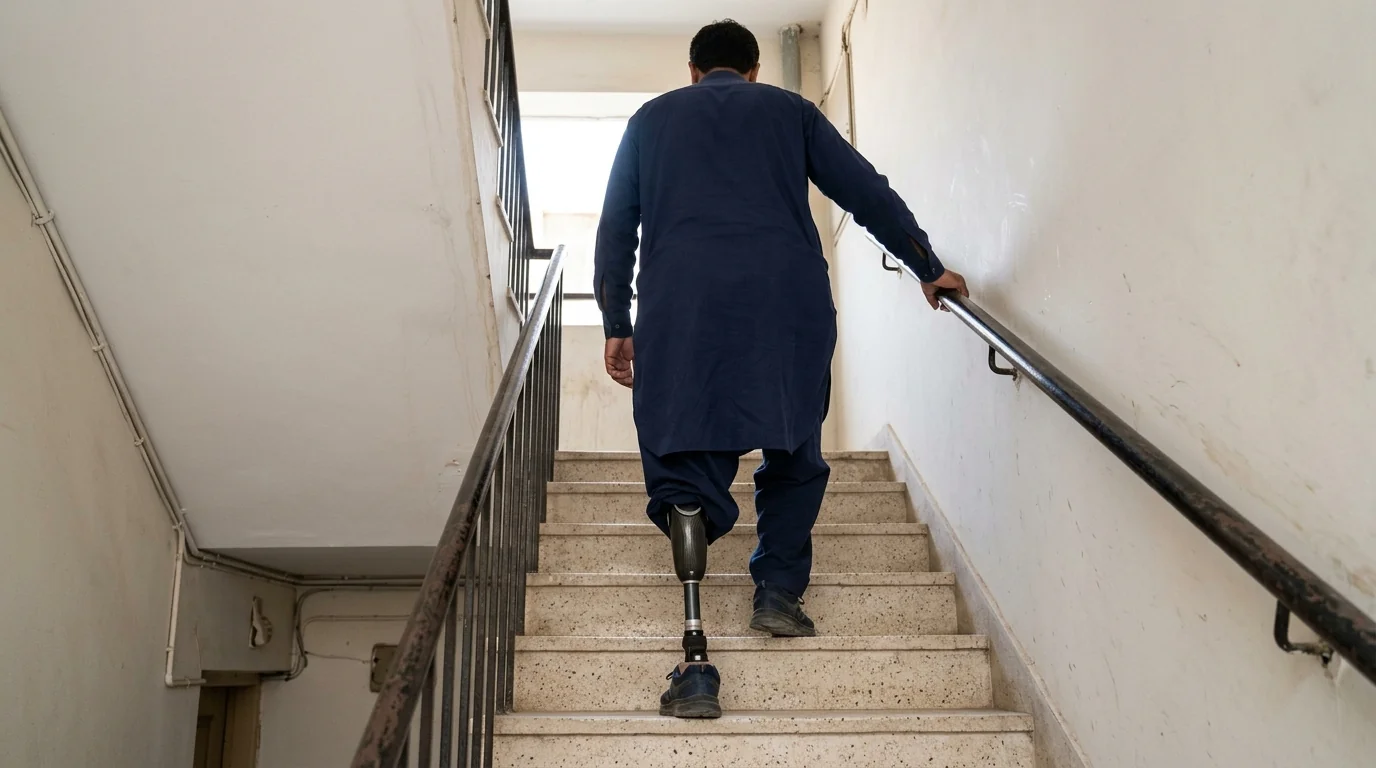
Good leg first going up, the prosthesis first coming down. Hold the rail or the rickshaw frame while you learn.
Stand for qiyam with the leg on; sit on a chair or take the leg off for sajda if the knee will not bend far enough.
See your doctor first if
- The wound is open, weeping or smells, or redness is spreading
- You have a fever, chills or new pain at night
- Your blood sugar has been high or hard to control
- The skin on your other foot has a new sore, colour change or numbness
- The stump is swelling more each day instead of less
Once your doctor is happy, call us and we will plan the assessment around their advice.
Questions
Below knee questions families ask
Ask anything else on WhatsApp or call +92 337 8414002, day or night.
How much does a below knee prosthesis cost in Pakistan?
A dependable local build starts from Rs 80,000. A mixed build with a silicone liner and an imported foot usually costs Rs 150,000 to 350,000, and a fully imported leg with vacuum suspension can pass Rs 900,000. The assessment is free and the firm price comes in writing.
How long after amputation can I get a below knee leg?
Usually six to eight weeks after surgery, once the wound has closed and the swelling has settled. After a diabetic amputation it can take longer. Shrinker socks and exercises in the meantime make the first fitting easier.
Will I walk without a stick?
Most below knee users do, once the socket fits and they have practised. Older patients and people with weak balance may keep a stick for long distances or uneven ground, which is sensible, not a failure.
How long does a below knee leg last?
The socket often needs changing within the first year because the stump shrinks. After that a socket usually lasts two to three years and a good foot three to five years with normal care.
Can I sit on the floor or pray with it?
Sitting cross-legged is only partly possible with the leg on. Many users sit on a chair for meals and sajda, or take the leg off. We show you the safest way during training.
Is a silicone liner worth the extra cost?
For most people, yes. It spreads pressure, reduces rubbing and holds the leg on better. In Karachi heat it needs washing every night, and a second liner helps.
Related
Other limbs and help you may need
Talk to the clinic
Book a free below knee assessment
Call or WhatsApp with the date of surgery and a photo of the stump. We will tell you if it is ready and what the leg would likely cost.