The fitting process
How an artificial limb is fitted, visit by visit
Most people are nervous before the first visit because they do not know what will happen. Here is every step, how long each one takes, and what you can do at home to make it go faster.
- Free assessment
- Written estimate
- Answered 24/7
Clinically reviewed by Ummad Shafique Mughal, Consultant Orthotist and ProsthetistUpdated 6 October 2026
The short version
Five stages, every limb
Every limb goes through the same five stages: an assessment, a cast, a clear test socket, the final limb, and training. What changes from level to level is how many visits each stage takes.
A below knee leg usually takes three to five visits over three or four weeks. Silicone hands and fingers take two or three. Hip level legs and myoelectric arms take longer.
The timeline
What a typical below knee fitting looks like
Arms are often a little quicker; hips, both legs and myoelectric arms take longer.
- Call or WhatsAppLevel, date of surgery, where you live.
Day 1
- Free assessmentSkin, strength, balance and your goals.
Week 1
- Cast and measurePlaster impression and measurements.
Weeks 1 to 2
- Test socketA clear socket to find pressure points.
Weeks 2 to 3
- Final limbFinished, aligned and fitted.
Weeks 3 to 4
- Training and follow-upPractice, then checks as the stump settles.
Weeks 4 to 8
If the stump is not ready, we say so and show you how to prepare. Fitting too early causes sores and setbacks.
Visit by visit
What happens at each visit
- The assessment
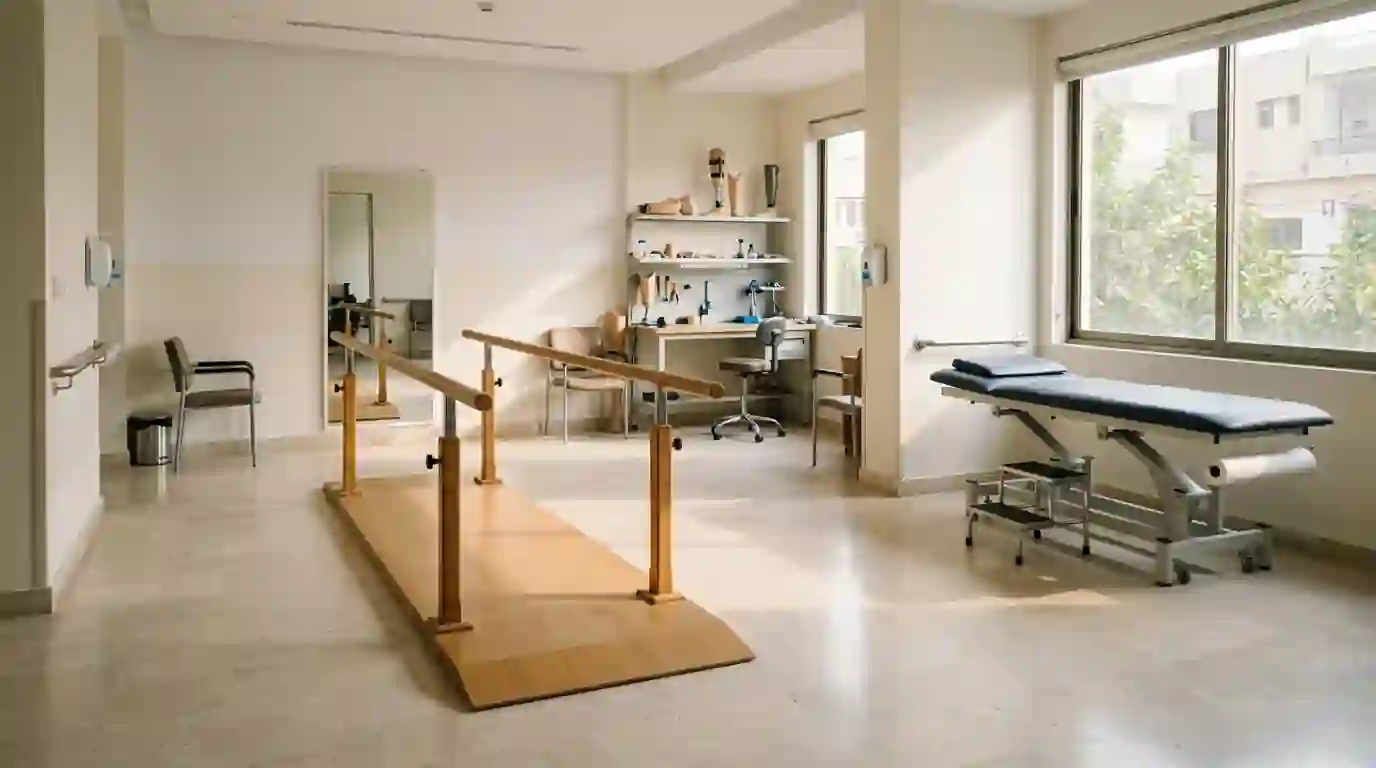
We look at the wound, the shape of the stump, joint movement and strength, and ask what you want the limb to do.
- The cast
Plaster bandage is wrapped over a thin sock on the stump and shaped by hand. It takes about twenty minutes.
- The test socket
A clear plastic socket shows exactly where it presses. We mark it, adjust it and try again.
- The final limb
The socket is finished, the joints and foot or hand fitted, and everything aligned to you.
- Training
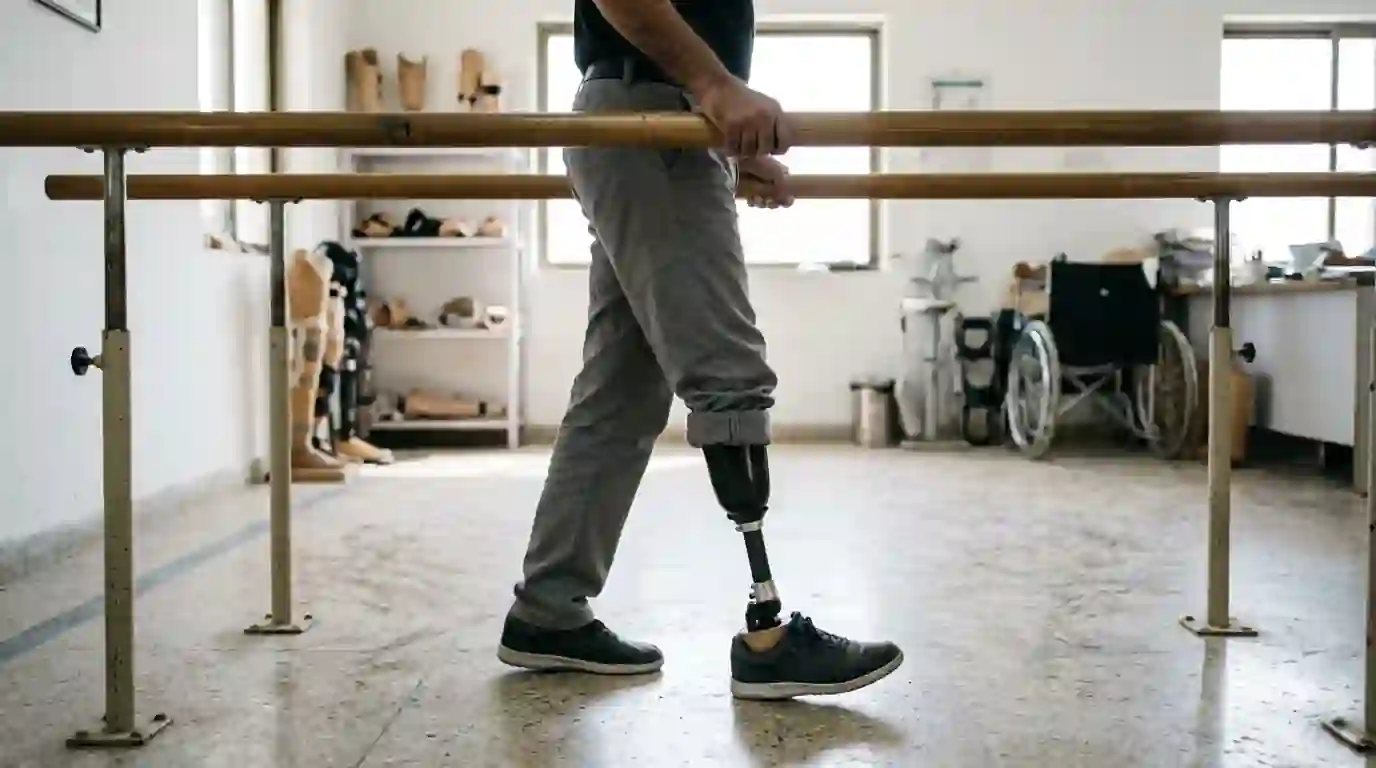
Standing and weight shift, then walking; for arms, putting it on, opening, closing and real tasks.
- Follow-ups
Short visits as the stump changes. Small adjustments now prevent big problems later.
Legs and arms
How leg and arm fittings differ
Leg fittings
- Weight-bearingThe socket must carry your whole weight with every step.
- Balance trainingMost training time goes into balance and walking.
- Alignment matters mostSmall angle changes make a big difference to your walk.
- Usually 3 to 7 visitsDepending on the level.
Arm and hand fittings
- Control and gripThe socket must stay put while you lift and reach.
- Task trainingPractice with cups, keys, bags and work tasks.
- Colour matchingSilicone hands and fingers are matched in daylight.
- Usually 2 to 7 visitsFewer for silicone fingers, more for myoelectric arms.
Before you come
What to bring to your first visit
- Shorts or loose clothingSo we can see the stump and the joint above it.
- Your discharge papersThe surgeon's notes help us understand the operation.
- Your old limb, if you have oneIncluding liners and socks.
- A list of medicinesEspecially for diabetes, blood pressure or blood thinners.
- Someone to helpA family member makes home practice and travel easier.
How long it takes
Visits and time by level
| Limb | Usual visits | Typical time |
|---|---|---|
| Fingers or partial hand | 2 to 3 | About 2 to 4 weeks |
| Silicone hand | 2 to 3 | About 2 to 4 weeks |
| Partial foot or Syme's | 2 to 4 | About 2 to 3 weeks |
| Below knee leg | 3 to 5 | About 3 to 4 weeks |
| Below elbow arm | 3 to 5 | About 3 to 4 weeks |
| Above knee leg | 4 to 6 | About 4 to 6 weeks |
| Above elbow or shoulder arm | 4 to 6 | About 4 to 6 weeks |
| Hip or through-knee leg | 4 to 7 | About 4 to 6 weeks |
| Myoelectric arm | 5 to 7 | About 4 to 8 weeks |
Imported parts ordered after the test socket can add waiting time; we tell you before you agree.
Questions
Fitting questions
Unsure about a visit? Call +92 337 8414002.
Does the casting hurt?
No. The plaster is warm and snug for about twenty minutes, then it is removed. Tell us if anything feels sharp or too tight.
Why do I need a test socket?
It lets us see exactly where the socket presses before the final one is made. It is the step that prevents most sore spots.
Can visits be done in one trip?
Often, if the stump is ready and you can stay in Karachi for a couple of weeks. Tell us your dates and we will plan around them.
What if the final limb hurts?
Come back. Adjustments in the first weeks are normal, and a limb that hurts is a limb we have not finished.
Can a family member come in?
Yes. We encourage it, especially for older patients and children.
When should I come back after fitting?
We book follow-ups at the final fitting, usually within a few weeks, and sooner if anything hurts.
Talk to the clinic
Ready for the first visit?
Call or WhatsApp to book the free assessment. Tell us the level and the date of surgery and we will plan the visits with you.